Need a Technical Advice?

Custom 3-Ton Hydraulic Goods Lift with Integrated Ramp for Industrial Logistics in Spain

Project Overview

This engineering project involved the design, manufacturing, and installation of a high-capacity, pit-less hydraulic goods lift for a prominent distribution center in Valencia, Spain. As a key maritime and logistics hub in the Mediterranean, the facility required a vertical transport solution to facilitate the movement of palletized goods between the ground floor and a newly constructed mezzanine level.

The primary technical objective was to deploy a 3000kg (3-ton) capacity [Internal Link: hydraulic goods lift] without the need for structural excavation. Due to the existing reinforced cement floor and subterranean utility constraints at the Spanish site, a traditional pit was not feasible. The solution required a specialized “surface-mount” configuration featuring a heavy-duty approach ramp to allow for seamless forklift loading. The system was engineered to operate on the local 380V/50Hz three-phase power grid, ensuring full compliance with Spanish UNE-EN 81-31 safety standards for industrial service lifts.

Challenge & Solution

Challenge

The Spanish client faced several structural and operational bottlenecks that necessitated a highly customized engineering approach. Standard off-the-shelf cargo lifts failed to meet the specific site requirements of the Valencia facility.

  • Zero-Pit Constraint: The facility floor could not be excavated due to the high density of underground conduits. A traditional lift would require a 300mm to 500mm pit; without it, the platform sits above the ground level, creating a barrier for pallet jacks and forklifts.

  • Forklift Accessibility and Gradeability: To load 3-ton pallets, a forklift must transition from the warehouse floor to the platform. A standard short ramp would be too steep, risking load instability or forklift undercarriage damage.

  • Load Balancing and Structural Rigidity: A 3000kg payload creates significant eccentric loading stress during entry and exit. A standard two-rail system would suffer from excessive swaying or rail deflection at a travel height of 3750mm.

  • Safety Interlocking Requirements: In high-traffic Spanish warehouses, the risk of unauthorized entry into the lift shaft is a major safety concern. The client required a solution where the lift operation and the mezzanine-level access were electronically synchronized.

  • Environmental Durability: Valencia’s coastal environment introduces higher humidity and salt levels, requiring a surface treatment that exceeds standard industrial paint durability to prevent long

Solution

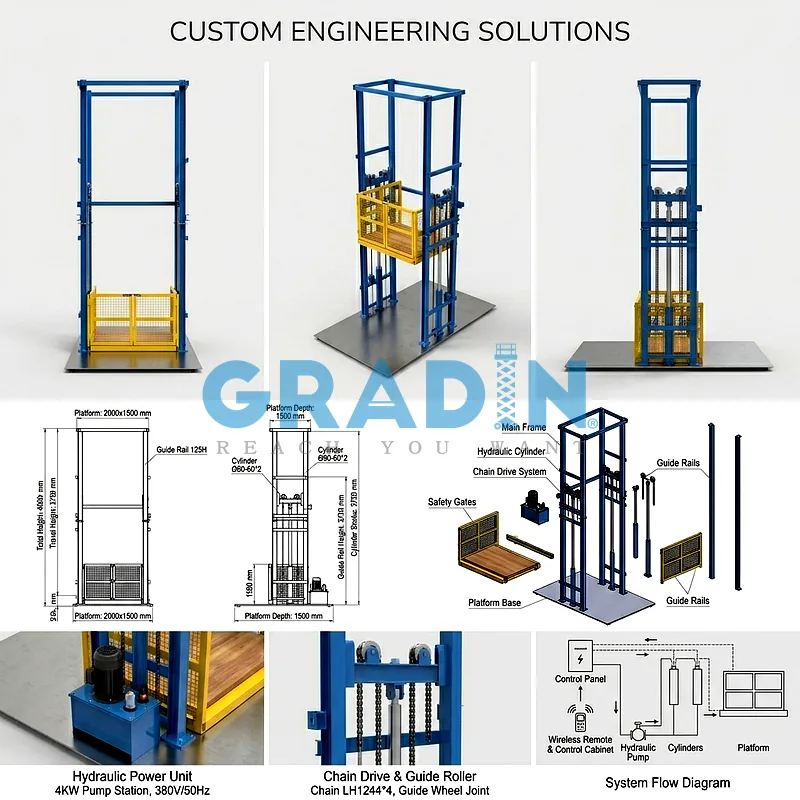
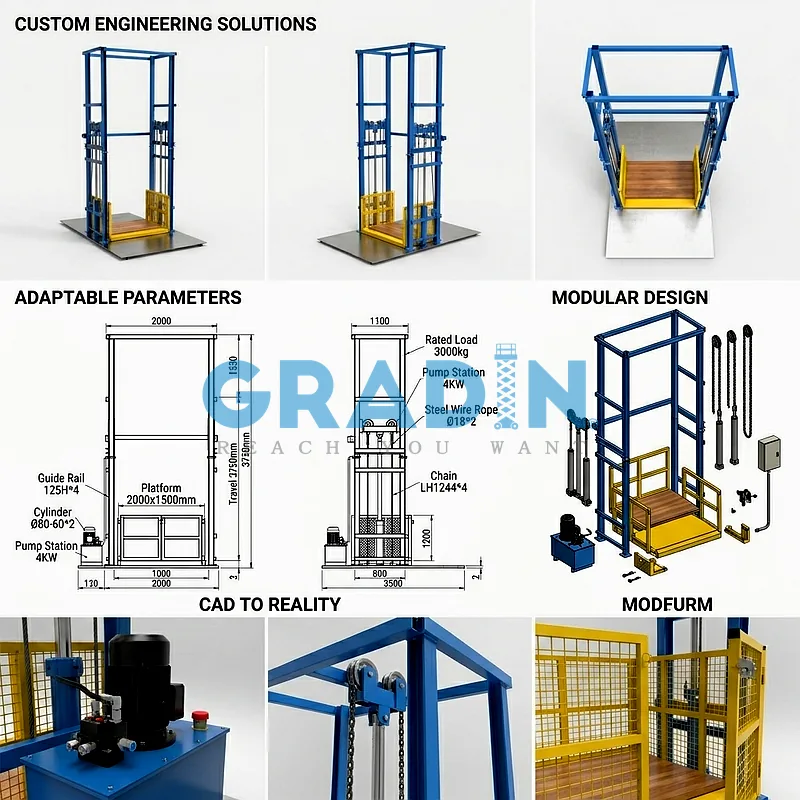
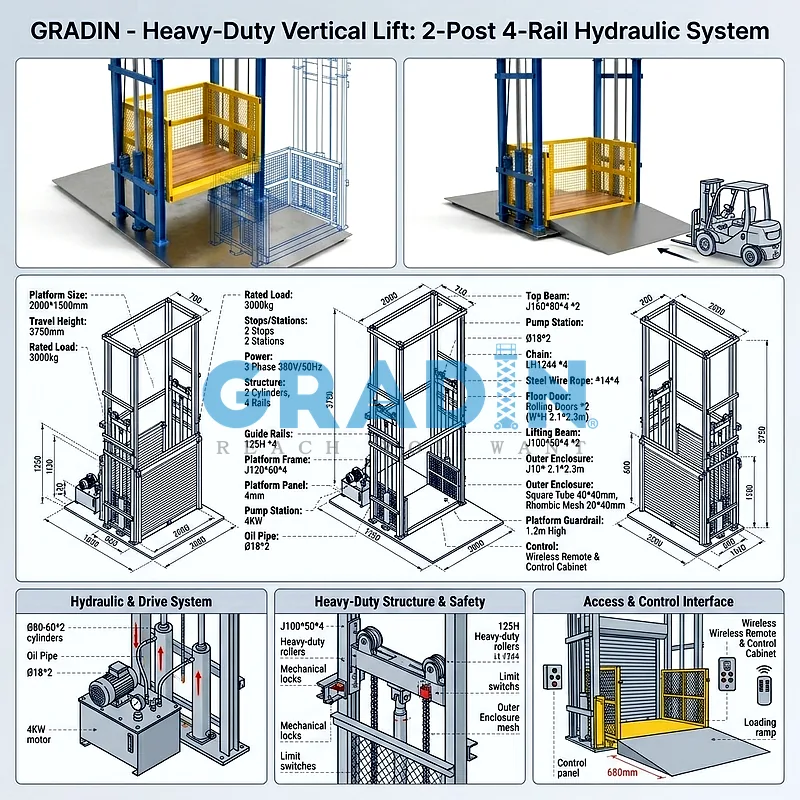
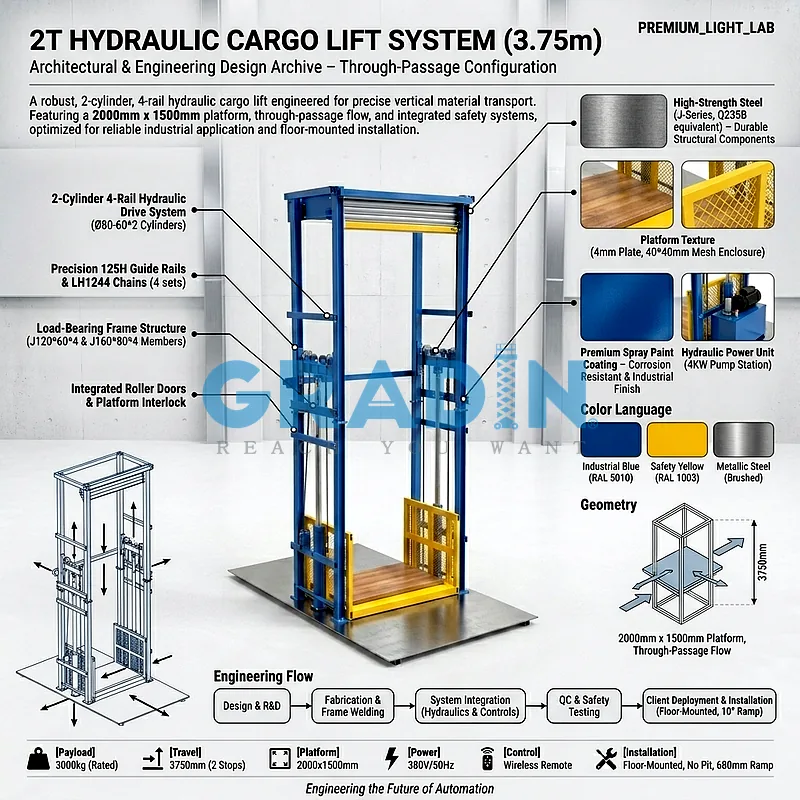
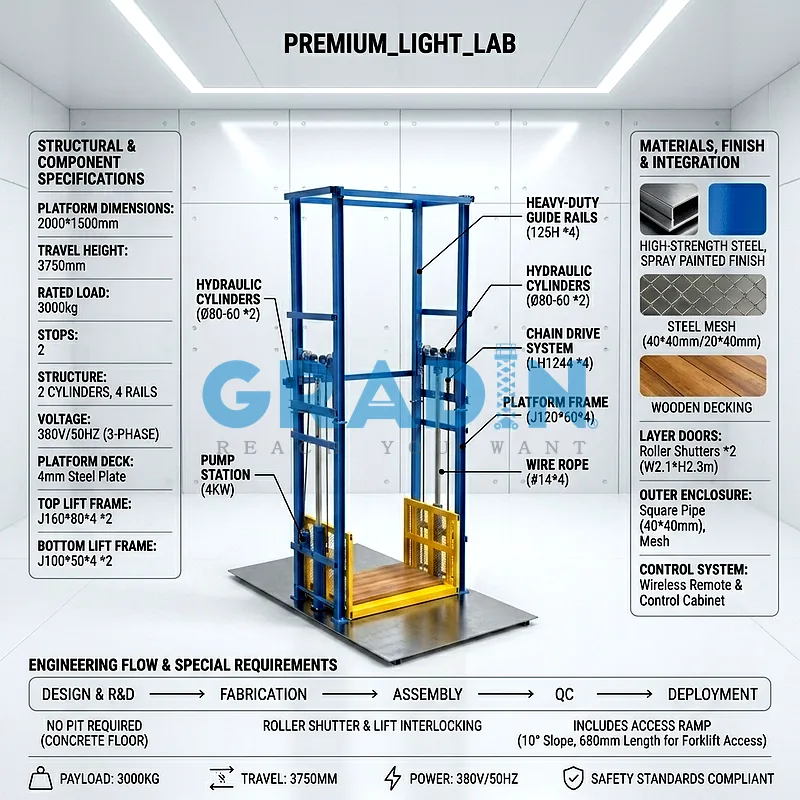
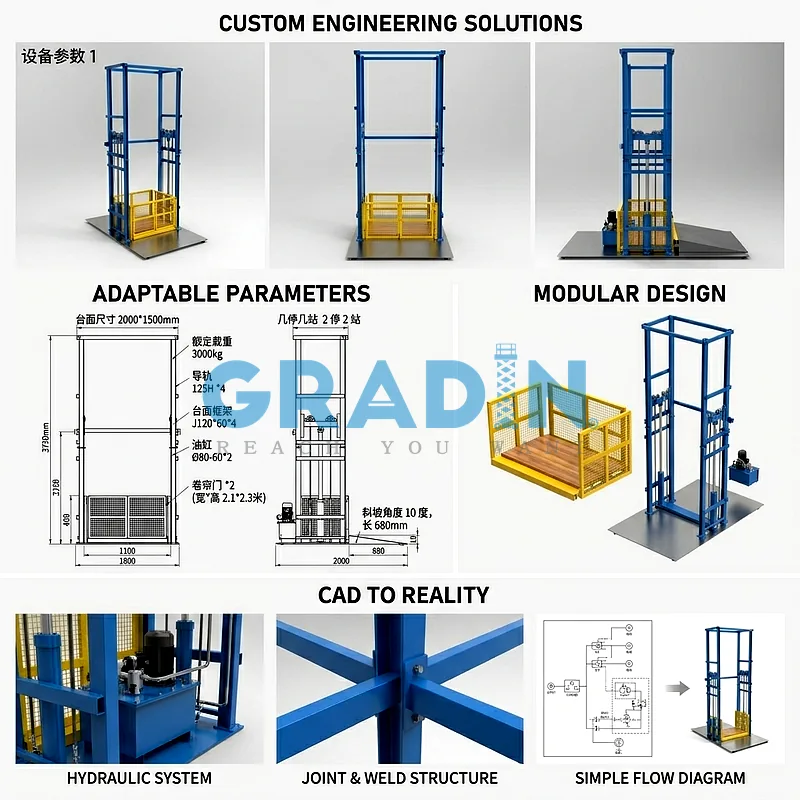
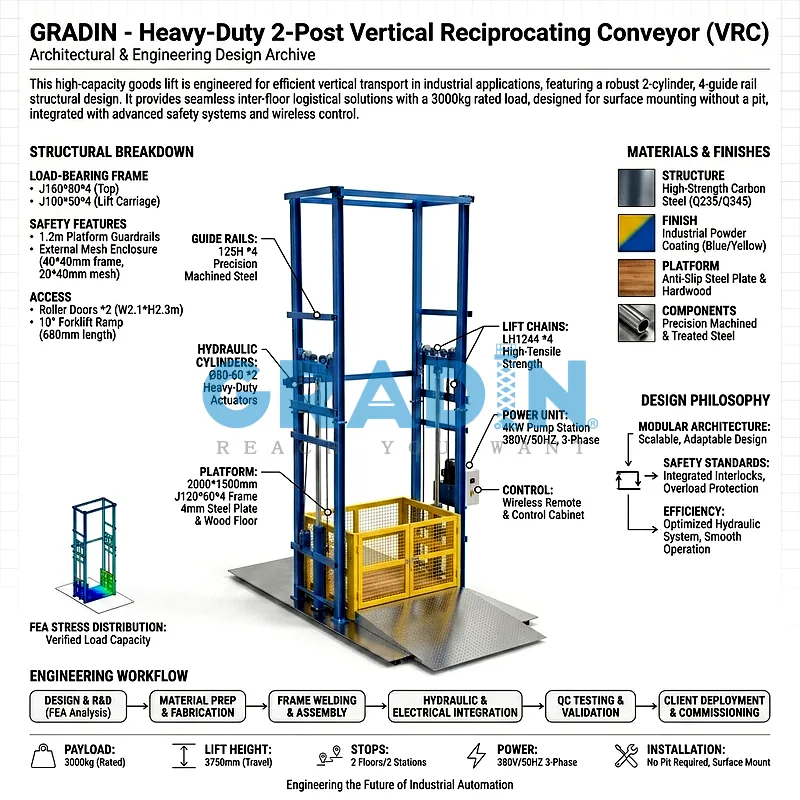
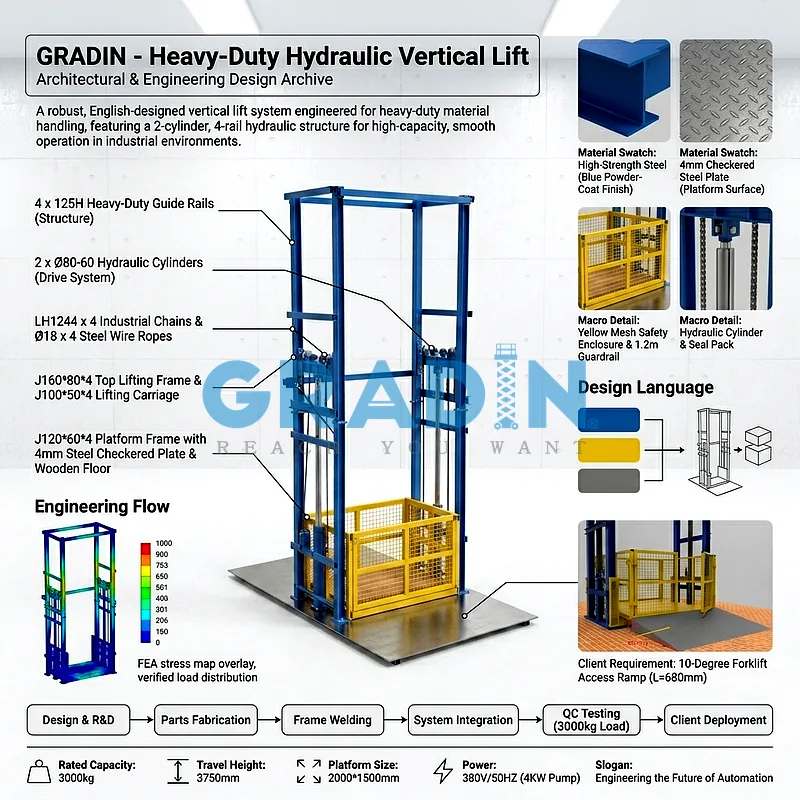
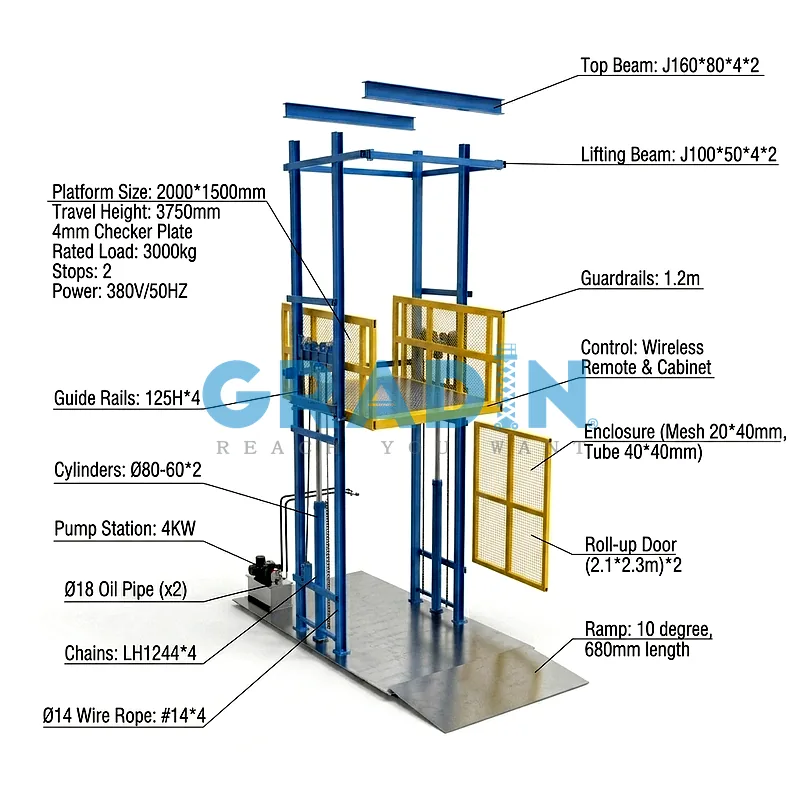
To address these challenges, our technical team engineered a Dual-Cylinder, Four-Rail (2-Cyl/4-Rail) hydraulic architecture, prioritizing structural redundancy and ergonomic access.

1. Surface-Mount Engineering and Ergonomic Ramp Design
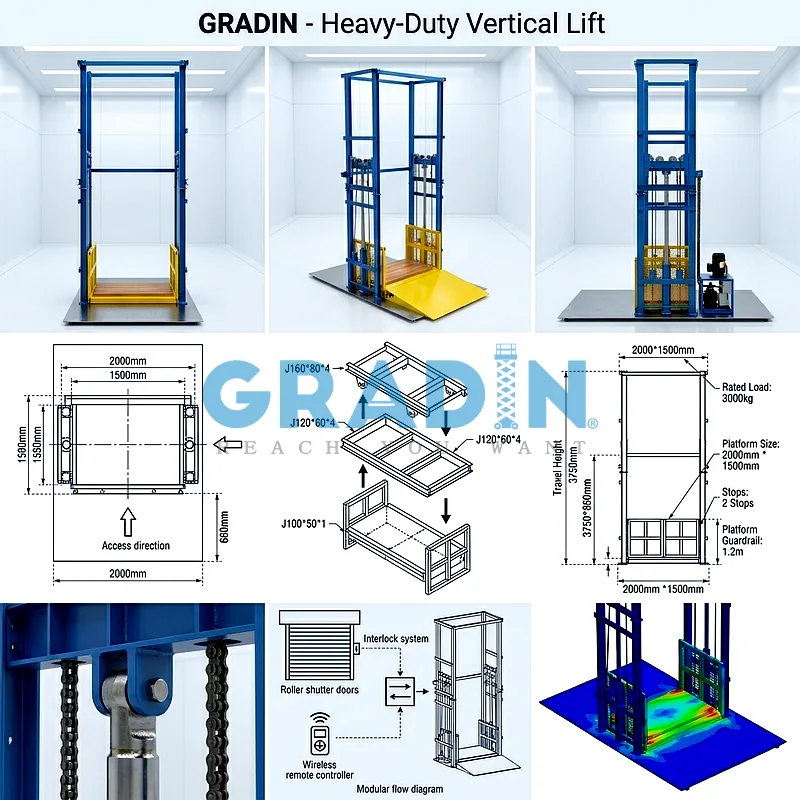
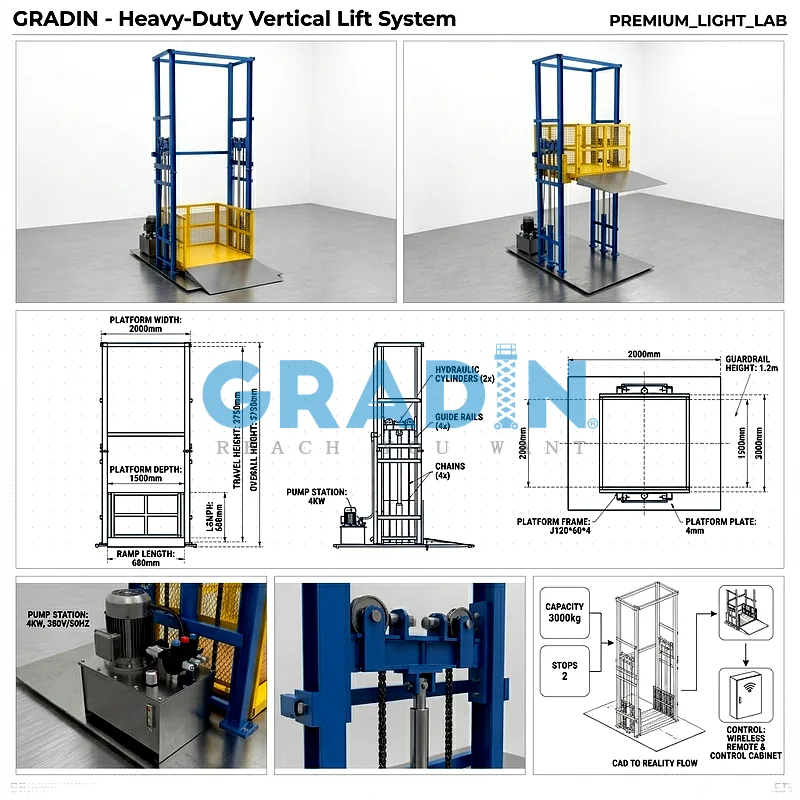
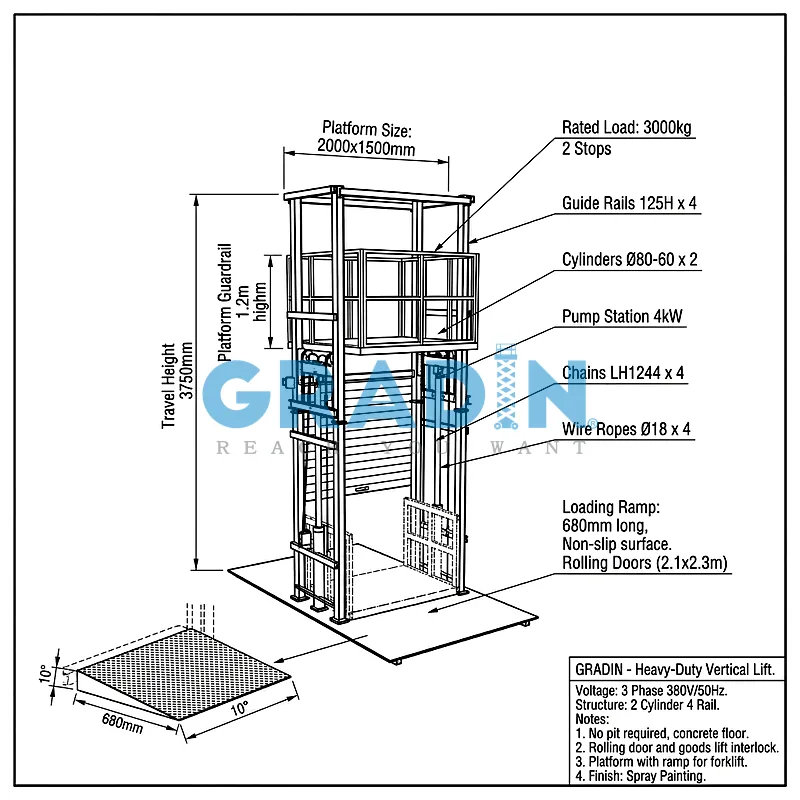
Since no pit could be dug, the platform was designed with a minimized closed height. To enable forklift access, we integrated a 680mm long approach ramp with a precise 10-degree incline. This gradient was calculated to ensure that standard industrial forklifts could transition the 3000kg load without losing traction or causing pallet shift. The ramp is fabricated from anti-slip chequered steel plate, ensuring safety during humid conditions.

2. 2-Cylinder 4-Rail Mechanical Synchronization
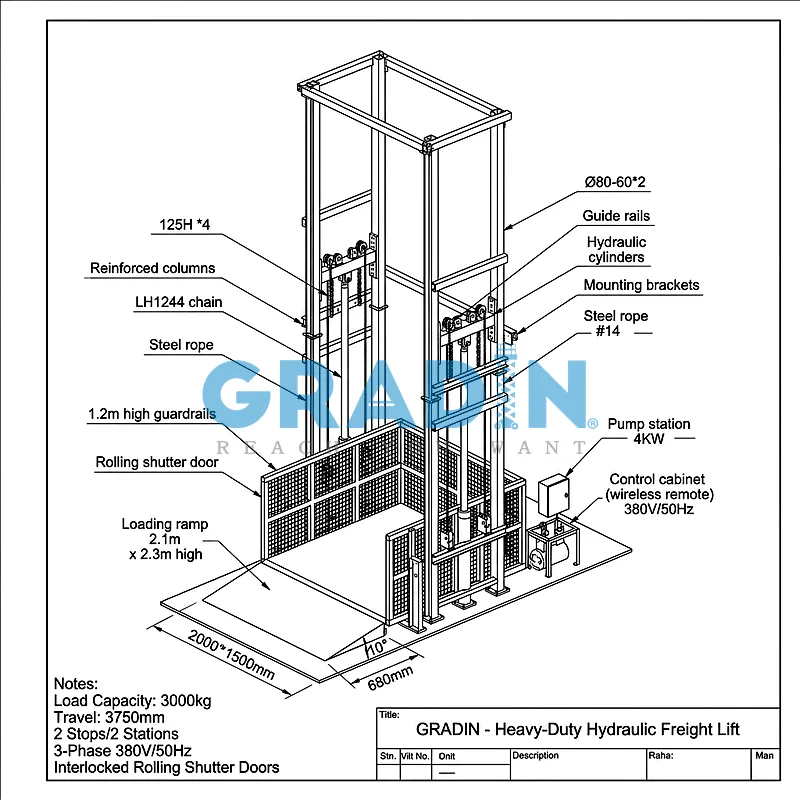
To manage the 3-ton payload and ensure platform stability, the lift utilizes four 125H-section guide rails and dual Ø80-60mm hydraulic cylinders. This 4-rail configuration distributes the vertical and lateral forces across a wider footprint, significantly reducing the torsion on the lifting carriage. The synchronization is further stabilized by four LH1244 heavy-duty chains and four #14 steel wire ropes, providing a 10:1 safety factor.

3. Interlocked Roller Shutter System
Safety compliance was achieved through the integration of automated roller shutter doors (2.1m W x 2.3m H) at both the ground and mezzanine levels. These doors are electronically interlocked with the lift’s control cabinet. The [Internal Link: freight elevator] cannot move unless all doors are closed and locked; conversely, the doors cannot be opened unless the platform is perfectly leveled at the designated station. This prevents falls into the shaft and ensures unauthorized personnel cannot access the mezzanine via the lift.

4. Advanced Control and Surface Protection
The system is managed via a centralized control cabinet and a wireless remote control, allowing operators to initiate lifting cycles from a safe distance or while seated on a forklift. The electrical system utilizes high-grade European-standard components to withstand the 380V/50Hz load cycles. To combat coastal corrosion, the entire structure underwent a rigorous powder coating process, which provides a superior chemical bond compared to liquid paint, ensuring the blue and yellow safety finish remains intact for years of high-duty-cycle operation.


Technical Specifications

The following table outlines the engineering parameters for the SL-3000-ES model deployed in Spain.

Parameter Specification
Rated Load Capacity   3,000 kg (3 Tons)
Travel Height (Stroke) 3,750 mm
Platform Dimensions 2,000 mm x 1,500 mm
Configuration 2 Cylinders / 4 Guide Rails
Guide Rail Type 125H High-Tensile Steel
Lifting Chains LH1244 * 4 Units
Safety Wire Ropes #14 High-Tensile * 4 Units
Drive Power Unit 4.0 kW Hydraulic Pump Station
Voltage Supply 380V / 50Hz / 3-Phase
Landing Doors 2x Automated Roller Shutters (Interlocked)
Access Hardware 680mm Ramp (10° Angle)
Surface Treatment Industrial Powder Coating (Blue/Yellow)

Project Gallery